Search This Blog

Wednesday, 13 August 2014

Recent research in open access publishing

By Diana Hodge

CC-BY_logo
http://aoasg.files.wordpress.com/2013/02/cc-by_logo.png 
Publishing articles in OA journals is now a firmly established practice in academia. Most articles are still published in the mainstream commercial titles but OA has carved a niche for itself. The advent of OA publishing doesn’t seem to have provided much relief to university libraries who still pay enormous subscription costs to publishers for journal access but it has at least made some research content available free of costs to the end user.

Ramesh Pandita (2013) looks at the global growth in OA journals over the last ten years by analysing data taken from the Directory of Open Access Journals (DOAJ). Pandita finds huge growth: 34 OA journals in production in 2002, growing to 8518 in 2012. Perhaps unsurprisingly the US leads the world in the number of OA journals it produces and in the number of new OA journals it creates each year. Brazil comes in second with Australia 18th on the list with 123 OA journals, 1.44% of the world total.

It’s not just the number of journals increasing but the number of countries getting into OA publishing that is also growing rapidly; 9 countries in 2002 and up to 121 in 2012. Pandita draws a parallel between the strength of a countries OA publishing and its economic development suggesting that the freely available intellectual content is being used by the countries citizens to drive development.

Pandita paints a positive picture of OA progress but how findable is OA journal content? The research carried out by Joel Cummings (2013) suggests it might actually be more accessible to those outside the university environment who are searching freely on the web than to those inside institutions who are searching through aggregators. Cummings looks at the indexing of OA scholarly journals by three multidisciplinary full-text aggregation databases, Ebscohost Academic Search Complete, Gale Onefile and Proquest 5000 International. Data from the Journal Citation Reports (published by Thomson Reuters) was used to indicate the significance of these OA journals.

The results of Cummings investigations showed that very small percentages of open access journals were indexed in each of the full-text aggregators studied. A total of 7.9 percent of titles included in journal citation reports were OA journals, this might not be much but it is a 303.8 percent increase from the 2.6 percent reported in a 2003 study (McVeigh, cited in Cummings 2013, p. 173).

Ebscohost indexed 1,656 OA journals, that is, 25.7 percent of all the OA journals included in the DOAJ, while Proquest indexed 340 OA journals, 5.3 percent of titles in DOAJ, and Gale indexed 163, 2.5 percent of titles in DOAJ. Most were available in full-text and the majority were in English. Cummings also finds that there are more OA journals at lower rankings than at higher rankings being indexed by the three aggregators.

Cummings concludes that researchers who search outside these aggregators may have access to a greater range of OA journals; that is via either the library’s discovery layer or internet search engines…why do we always end up back at Google?.

To sum up both articles – there is more OA material available than ever before but it is not necessarily getting easier to find.


References  - both available in fulltext in ALIA Proquest Journals package.

CUMMINGS, J., 2013. Open access journal content found in commercial full-text aggregation databases and journal citation reports. New Library World, 114(3), pp. 166-178.

PANDITA, R., 2013. Growing Trend towards Open Access Publishing at Global Level: An Analysis of Directory of Open Access Journals (DOAJ). International Research: Journal of Library and Information Science, 3(3), pp.565 – 578.

This article was first published in Incite 


Dr Diana Hodge, Manager Academic Library Services, Division of Education, Arts and Social Sciences, University of south Australia.

Wednesday, 6 August 2014

LARK Workshop

http://thechive.files.wordpress.com/2010/09/steampunk-inventions-10.jpg?w=500&h=592
bit.ly/1ob9V3X


By Suzana Sukovic

Do you have a good research idea but don't know how to start? Do you have a research project in a pipeline or a dusty folder and you really want to do it, but never have time? Do you need some feedback and inspiration? 

If you live in Sydney, the answer to your research prayers is the LARK workshop.

When? 29 September, 1.30-5pm followed by drinks and dinner
Where? Our regular place - St.Vincent's College, Potts Point
Cost: $10 for ALIA members, $15 for non-members
For RSVP and further details, see Eventbrite


Tuesday, 5 August 2014

Teaching the Expert Searcher; Smashing Learning and Searching Stereotypes?

By Janine Schmidt


"Professional Education in Expert Search: A Content Model" by Catherine L. Smith, Catherine L and Martha I. Roseberry, Journal of Education for Library and Information Science vol. 54 (4) Oct 2013 pp.255-269.


http://upload.wikimedia.org/wikipedia/commons/a/ab/Internet_of_Things.jpg
My attention was caught by this article which examines formal education programs for teaching library and information professionals to search effectively for information. Both the topic itself and the methods adopted for undertaking the analysis are of interest and have changed significantly. 
The study examines what is taught, rather than how it is taught, in library and information schools accredited by the American Library Association. It uses content analysis to examine the offerings of the schools, at the same time comparing the results with the literature on searching for information. 

The relatively recent history of search education is traced, with its initial emphasis on the use of Boolean operators moving on to source credibility and database design with the emergence of sophisticated search engines, end user searching and the decline of the role of the search intermediary. Despite the sophistication of search engines (or perhaps because of it), novice users in public and academic libraries and those with complex information needs remain in need of assistance from information professionals. Many libraries conduct training programs for their users in effective searching for information. The role of the expert searcher remains important in information-intensive subject areas like law and medicine and searching is included in accreditation guidelines and information professional competencies used by organisations like the Special Libraries Association. 

The study used content analysis and concept mapping to search and analyse curriculum content in course descriptions from the library schools. Perhaps surprisingly, the topics covered have changed very little. Three broad areas emerged. The first is the environment which involves an understanding of the information industry and the principles of information retrieval. The second relates to resources, sources of information, access tools and search methods, including information visualisation, front-ends and query languages. The third area concerns analysis, evaluating the results of searches, interaction with clients and the planning of searches. Scant attention seems to be paid to the new web-scale discovery search engines and the research evidence on client 
behaviour.

Numerous questions emerge from studies like this one. What is the role of formal education in a rapidly changing area? Does practice make perfect? How are skills best acquired and what makes effective learning? Is expert searching taught more successfully in a practical professional environment with real clients, genuine information needs and inquiries and the use of multiple databases and search engines? How are the web-scale discovery engines affecting expert searching and its teaching? Finally, how is expert searching being taught in Australian library schools? Charles Sturt University includes Searching for Information in one of its 16 units in the Bachelor of Information Studies program. QUT’s Master of Information Technology (Library and Information Studies) refers to identifying, accessing, evaluating and retrieving information resources to meet specific needs in its Information Retrieval unit while Curtin refers to advanced search strategies in its program. Perhaps closer collaboration between the practice and the teaching of the profession would bring better learning and smash the stereotypes more quickly. 

Originally published in Incite, February 2014 

Janine Schmidt is the Director of Mukurta Solutions 

Thursday, 31 July 2014

“Build it and they will come”: Evidence based practice from the literature

By Mary Anne Kennan


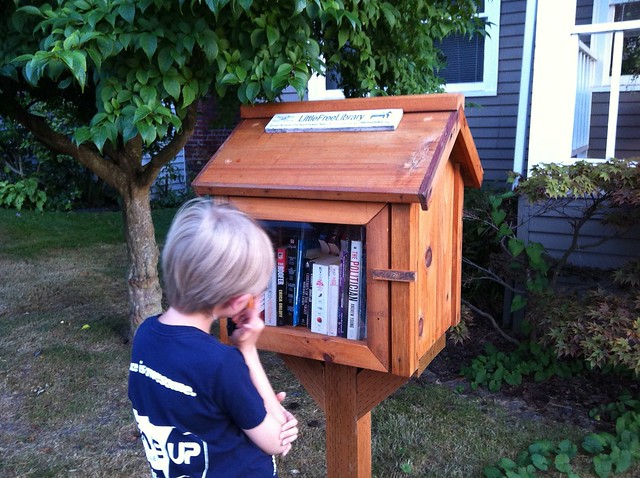
Little library bit.ly/1pI7x06
This article was first published in the special issue of Incite “Build it and they will come”. The intention was to examine how libraries and other information organisations promote and celebrate their services and the profession. If one searches on the string “Build it and they will come” in the Proquest journal database which comes to us as a part of our ALIA membership there are 84 articles in this relatively small LIS subset of the database from 1994 to the present which have the phrase in their title,  text or references.  The articles vary from research, to reports of services offered in particular libraries and what has worked (or not), to scholarly (and other) opinion pieces. Many of these types of publications we can use as evidence to inform our practice as information professionals for day to day decision making, developing new services, improving the quality of existing services and understanding our users. So let’s see what some of these papers say about “build[ing] it and they will come”.

There is not enough space in this short article to reprise even the small proportion of articles on this topic in this database, but what we can draw attention to, is broadly what the message seems to be: that is that it is not enough to just build a wonderful service. What the literature seems to say is accompanying the building of “it” – whatever the “it” is (a service, a digital collection, a repository, a building, a change) there needs to be a strategic approach to understanding user, and potential user, needs and their environments, communities and goals in the development of the service (e.g. Moyer& Coulon 2012; Salo 2008; Schlosser & Stamper 2012). It is not enough to think you may know what those needs are; your service is more likely to be successful if you reach out and consult, or even partner, with users and potential users (e.g. Kenney 2014; Moyer & Coulon 2012; Salo 2008; Schlosser & Stamper 2012) at all stages - service development, implementation and use.

Then of course are the other key elements in building a new service - well known and mentioned frequently in this issue - so covered only briefly here: promotion and marketing. Outreach is critical – make the new service visible. Social network, both online and in person. Leverage other media, such as the press, radio, and local bloggers (e.g. Doster 2013; Kenney 2014; Moyer & Coulon, 2013; Schlosser & Stamper 2012). In some cases, particularly involving new technology or practices, it is necessary to educate users and staff (Salo 2008). And to give the final words to Kenney (2014) “Meet people where they are – not where we want them to be”.

References

Doster, A. (2013). Friday night: library lights. American Libraries, 44(11), 30-32. Retrieved from http://search.proquest.com/docview/1466133420?accountid=50932  

Jones, N. B., & Mahon, J. F. (2012). Nimble knowledge transfer in high velocity/turbulent environments. Journal of Knowledge Management, 16(5), 774-788. doi: http://dx.doi.org/10.1108/13673271211262808  

Kenney, B. (2014). The user is (still) not broken. Publishers Weekly, 261(4), 19-n/a.  Retrieved from http://search.proquest.com/docview/1492572274?accountid=50932 

Moyer, M., & Coulon, A. (2012). LIVE at your library! American Libraries, 43(11), 46-48. Retrieved from http://search.proquest.com/docview/1223377171?accountid=50932

Salo, D. (2008). Innkeeper at the roach motel. Library Trends, 57(2), 98-123. Retrieved from http://search.proquest.com/docview/220445916?accountid=50932 

Schlosser, M., & Stamper, B. (2012). Learning to share: Measuring use of a digitized collection on flickr and in the IR. Information Technology and Libraries (Online), 31(3), 85-93. Retrieved from http://search.proquest.com/docview/1080967094?accountid=50932 


Mary Anne Kennan is the Higher Degree by Research and Honours Coordinator and Senior Lecturer at the School of Information Studies, Charles Sturt University.

Tuesday, 29 July 2014

Can you be remote in a digital world?

By Heather Todd

Explanatory Practice for Learning 2:0 Based on a Cumulative Cumulative Analysis of the Value and Effort of ’23 Things’ Programs in Libraries (2013) by Michael Stephens.  Reference and User Serves Quarterly, Vol 53, No 2, p 129-39


Whether you are a librarian or a student distance is no longer a barrier to information as it used to be as evidenced by two recent articles.  

Kansas State University Libraries have undertaken a survey to assess the awareness and use of library services by distance education students and faculty staff members. They used the results as an indicator to make some changes but the solutions also impacted on the entire scope of their services and resources.  The concept of Universal Design (that design of products and environments be useable by all people) was used in all the initiatives – which included implementation of a web scale discovery tool to improve access to print and digital collections, redesign of a database directory, electronic delivery of book chapters and journal articles, the digitisation of local collections, enhanced chat services, collaboration with instructional designers who undertook usability studies on webpages and also created online tutorials, and last but not least improvements in the marketing and promotion of library services. 

As befitting universal design all the changes have provided benefits to all clients so ‘rather than compartmentalizing distance patrons, it is important to focus on helping them to have an experience that is as much like an on-campus patron as possible.’

Regardless of location the importance of ongoing professional development is recognised and programs such as ’23 Things’ are now available to all.  The original ’23 Things’ was launched in 2006 at the Public Library of Charlotte Mecklenburg County, USA and since then there have been hundreds of adaptions to cater for new areas of focus and technologies.  Michael Stephens has undertaken an analysis on the impact of this multi-week, fully online self-directed program that has become a popular professional development activity for librarians around the globe.  The study is based on the exploration of the impact and effect of the program on library staff in Australia and USA from 2009 to 2012. 

As well as exploring the impact on library staff the study also looked at how the model has been used for library patrons.  Several libraries have adapted the program for its clients to grow their digital literacy skills.  One library developed their own program aimed at helping parents explore and experience technology with their children.  The State Library of Queensland offers a version of the program called ‘Looking at 2.0” http://www.slq.qld.gov.au/services/learning/looking for their customers.  This program offers 13 topics, arranged into beginner, intermediate and advanced modules which are aimed to get customers online and using web technologies.   

The study concluded that the programs can have ‘a positive effect on participants and their confidence and ability to use technology in their profession and personal lives’

There is a wealth of self-development opportunities available to us all many of which are listed on the ALIA website or delivered to your email account via the ALIA PDPostings service.  You are no longer remote in a digital world. 

This post was first published in InCite, August 2014.


Heather Todd is the Director of Scholarly Publishing and Digitisation Service at the University of Queensland Library and a member of the ALIA Research Advisory Committee.


Thursday, 24 July 2014

Educating for print disabilities

By Katherine Howard

Senf, K., Black, F.A. and Mann, D. (2010) Education and Training for Serving those with Print Disabilities: Exploring the International Scene
Feliciter 56(3) pp. 102-4.


http://upload.wikimedia.org/wikipedia/commons/d/da/Woman_reading.jpg
What exactly do library staff need to know in order to serve people with a print disability? What is a print disability anyway?

There are various definitions of ‘print disability.’ In essence, it refers to people who have difficulty with text-based (print) documents. The reasons for this are varied, with perhaps the most apparent being blindness or a vision impairment. However print disabilities extend to people who have a learning disability such as dyslexia, or a physical disability in which it is difficult for them to hold and/or manipulate a hard-copy book.

Users with print disabilities – indeed any disability – deserve the same rights to access as any other user. Digital technologies have had a positive impact on adaptive and assistive technology, not least of which is the availability of accessible formats and the relative ease with which files can be transferred from one format to another. However funding (or in most cases, lack of) has meant that many libraries struggle to meet the needs of this distinct user group. The purchase of the technology is one thing. Having staff who have the necessary competencies to work with this equipment (which can also include knowledge of compatible hardware/software that the client may own) is another.

This brief article reports on research that was conducted in Canada, with respondents from Canada, the United States, the United Kingdom, Australia and New Zealand. Both LIS Programme Directors and Library Managers from these countries were surveyed to “establish the level of knowledge directors and managers encourage and require in their graduates and employees […]” (Senf, Black and Mann, 2010, p. 102).

Of the library managers who responded to the survey, 98% have library users who have a print disability (the article does acknowledge the biases that are inherent with ‘self-selecting’ surveys). These managers also believe that their staff should be well-informed with regard to print disabilities, incorporating knowledge on what is involved in serving this user group. In Australia, this would include knowledge of our complex Copyright legislation and the circumstances (exceptions) under which printed documents may be made digital (digitized). Unfortunately, 49% of managers responded that the new graduates that they had hired “did not have adequate knowledge of print disabilities” (Senf et al., 2010, p. 104).

This is not surprising, given that the majority (approximately two-thirds) of LIS Programme Directors noted that providing information about special needs groups is not a formal objective of their programme. Students tend to be made aware of the print disabled population predominantly through elective options as opposed to learning it in required courses.

Attempting to incorporate knowledge of special needs groups into already bursting LIS curricula would require an amazing juggling act on behalf of LIS educators. Similarly, as much as our professional ethics and our own conscience may want to be able to provide access to everyone in a format and on a device of their choosing, funding realities for public institutions are such that this may not happen. However, this does not mean that we cannot do our utmost and use our passion for lifelong learning to determine the best way to serve people with print disabilities within these very real constraints.

 
You can read the full article via the ALIA online journals at
It was originally published in InCite, September 2013
Katherine Howard is a PhD Candidate at the Queensland University of Technology and Lecturer at the University of South Australia


Friday, 18 July 2014

Connecting with new information landscapes: information literacy practices of refugees

Drs Annemaree Lloyd, Mary Anne Kennan, Kim M. Thompson, Asim Qayyum
Journal of Documentation, Volume: 69 Issue: 1; 2013

By Annemaree Lloyd

https://www.flickr.com/photos/publik15/3917574528/in/photostream/
The purpose of the research was to understand how refugees learn to engage with a complex, multimodal information landscape, and how their information literacy practice may be constructed to enable them to connect an be included in their new information landscape. The study was framed through practice and socio-cultural theories. A qualitative research design was employed including semi-structured face-to-face interviews and focus groups which were thematically explored through an information practice lens.

The findings of the study indicate that refugees encounter complex and challenging information landscapes that present barriers to their participation in their new communities. Social inclusion becomes possible where information is provided via sharing through trusted mediators who assist with navigating the information landscape and information mapping, and through visual and social sources. The study highlighted the role of, and importance of social and visual information sources and the key role of service providers as mediators and navigators.

The article was awarded the Most Outstanding Article by the international Journal of Documentation. It is freely available here.


Annemaree Lloyd is Senior Researcher at the School of Information Studies, Charles Sturt University