Search This Blog

Monday, 2 October 2017

2018 Rural Research Capacity Building Program

By Suzana Sukovic

Some of you may have already heard of an excellent capacity building program for health workers in rural and remote areas of New South Wales. The good news is that applications for the 2018 Rural Research Capacity Building Program are now open. Even better, it has been confirmed that the program is not for health staff only. Dr Kerith Duncanson, Program Officer, invites library and information staff to apply:
We have had such wonderful support in the past for RRCBP candidates from Local Health District librarians, and also within the systematic review courses. However, we have never had a librarian in the program and there are many topics that would be useful and applicable for a librarian to investigate. Therefore, if any of the librarians were interested in developing research skills and have a research question to answer, we would encourage an application.
Some of you may have heard about the program in LARK's webinar in February. You may now like to hear or revisit Kerith Duncanson's presentation From experienced health clinician to novice researcher to find out more about the program.

Applications are open till 31 October 2017. Click here for further details. 


Tuesday, 26 September 2017

Those research birds: a day with LARK

By Paige Wright

The post was originally published on the blog Paige the Librarian.

Friday I attended the ALIA LARK (Library Applied Research Kollektive) seminar, Holy Evidence! Research in Information Practice. This post will discuss some highlights and tips from the seminar, so if you are a GLAMR professional interested in research, read on! If you are interested in knowing more about LARK, please read their blog (which you are doing now).

The day started out with Dr Suzana Sukovic (‘Mother of LARK’, works at HETI) explaining a bit about LARK itself. She made the point that a lot of research happens in bubbles and LARK is about breaking these bubbles and making connections between LIS researchers. She noted the biggest challenges faced by LIS researchers are time, skills and that it’s not part of their job descriptions. Librarians can be aided by organisational support, communities of practice, grants to free time and interprofessional learning.

It is important to note at this point that research is a complicated topic. There are academics out there doing Research, living in the world of PhDs and peer-reviewing. There are also information practitioners who are doing research, sometimes internally for their own workplace benefit and sometimes presenting their findings at conferences. After this seminar I can see that these two types of researchers can benefit from each other. In fact, Ms Fiona Salisbury and Dr Bhuva Narayan, Co-chairs of the ALIA Research Advisory Committee talked to the group about how the ALIA research grant focused on providing support for projects in which academics and LIS practitioners collaborated.

We also heard a bit from Dr Bhuva Narayan and Dr Mary Anne Kennan about JALIA – ALIA’s journal. I learned that JALIA articles had different levels of articles, including a feature called ‘Information in Practice’ which is sharing what people are doing in the field and not peer-reviewed, although peer-reviewed research articles are also featured. It gives an opportunity for people with different research skill levels to be involved in being published.

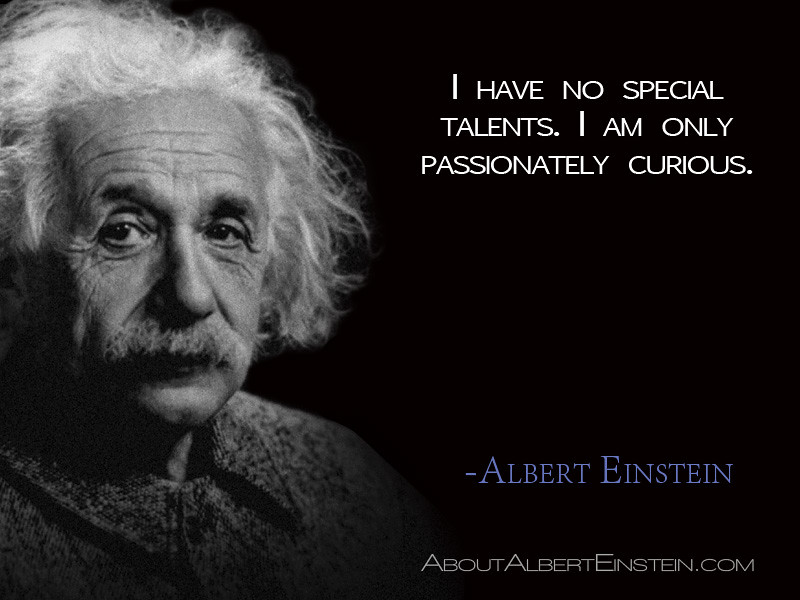
One re-occurring theme of the day was interprofessional learning. We heard from David Schmidt of HETI who talked about overcoming barriers to research and being enablers of research. He also noted that often people put research on a pedestal, thinking it is something that people somewhere far away in lab coats do. David says, 'If you have tenacity and curiosity, you have what you need to be a good researcher.' One of my favourite takeaways from David’s talk was the statement that ‘Librarians underestimate their ability to enable research by connecting people’.  Here is a slide from David’s presentation, which shows off his amazing MS Paint illustration skills:

A slide from David Schmidt's presentation


The research in LIS practice panel discussion was amazing and we heard from an academic librarian, a public librarian and a health librarian. They all had interesting projects and unique perspectives. Sally Scholefield talked about her collaboration with academics on writing a research paper on the RFID project at UTS. You can read the paper here. Liz Griffiths from Willoughby City Council Libraries discussed peer-led learning in a public library and I found the public library research perspective fascinating. Suzanne Lewis from the Central Coast Local Health District talked about her collaborative project designing an integrated care search filter. Suzanne’s research amazed me in that there were so many different people involved in the project and she managed to co-ordinate them all.

The second half of the day we heard more from our research experts on skills for research in practice. The biggest takeaways from this were 1) align your research with the strategic goals of your library and get the support of you organisation 2) Follow through all the research steps: planning, acting, observing, reflecting, organisation process, organisation support 3) Share your research, either internally with your colleagues or externally by publishing or even blogging about it.

The overall outcome of the day for me is that I am more interested in research than ever before. From here I’m going to comb the LARK blog for more tips, keep reading peer-reviewed LIS research articles, comb through my notes from the seminar and start forming my research question.  I’m interested in hearing your first-time research stories and tips. If you have any for me, please comment or tweet me at @WrightPaige.

Paige Wright (@WrightPaige) is a Special Collections Librarian at the University of Newcastle Library. Her interests include open access, digital repositories and digital special collections.

Monday, 11 September 2017

LARK’s seminar grants

By Suzana Sukovic

LARK is getting ready to celebrate its fifth birthday in research style next week. With speakers and participants coming from close and afar, it really feels like birds of a feather are flocking together. 

If you haven't secured your place, there is still time to check our program and register. You will be able to claim ALIA PD points. 

LARK's preparations for a whole research day are getting even more exciting now that we can grant some free registrations.  

LARK is inviting full time library and information students and people from rural and remote areas to apply for a seminar grant. We have 3 free registrations available for suitable candidates. 

If you are interested, you need to apply quickly as applications close this week, on Friday 15 September
Click here for further instructions and to apply online.

Seminar audience: primarily LIS professionals, but it is suitable for educators and anyone who wants to learn about research in practice.


Thursday, 31 August 2017

Cultivating a Culture of Curiosity? The Benefits of Doing So if Research is on Your Mind

Source

By Virginia Wilson

Many information organizations strive to create a culture of research for different reasons. Some, like many Canadian academic libraries, do so to encourage their librarians who are required to conduct and disseminate research for professional advancement, i.e. tenure, permanent status. Others have embraced evidence based library and information practice (EBLIP) where research alongside professional expertise and what the users want/need is prevalent. Still others see research as an important part of librarianship where research can inform practice. And then there are combinations of the above. Indeed, our own University Library has spent the last 10 years developing a robust culture of research, where research and scholarly activity are supported and encouraged, as librarians are faculty members and on the tenure track. We also consider the tenets of EBLIP in our practice of professional skills. 

However, many librarians do not have extensive training in the research enterprise. Library schools offer the obligatory research methods survey class and unless the librarian also has another graduate degree or opts for the thesis route in library school, research experience is not a given. So, when a librarian comes into a culture of research, it can be daunting and frustrating no matter what supports are offered and a common difficulty for new librarians is trying to think of or decide on a research topic. It seems to look (simplistically1 ) like this:


Even though we ask candidates about their research interests, often the idea of the actual doing of research doesn’t hit home until the candidate is faced with the realities and requirements of the tenure process. 
The research life cycle looks something like this:


"Research Life Cycle" image from UC Irvine Library Digital Scholarship Services 

Found on University of Michigan Scientific Discovery Path of Excellence - An Information Resource Starter Kit.This seems to be a robust and thorough depiction of the research process (although I might use the term “data” instead of “assets” in the Implementation box). I like how this process encourages open access publishing and includes social media as a source of impact metrics. It’s good stuff. But nowhere in this process is there a description of coming up with a research topic. It presumes that the topic is there and the research question is already at hand. 

I wonder then if the idea of a “culture of research” is too late in the game. There are many different cultures an information organization can strive to create: culture of learning, culture of excellence, culture of success, but what about a culture of curiosity?  
Curiosity 
1:  desire to know:b:  interest leading to inquiry - intellectual curiosity - Her natural curiosity led her to ask more questions.https://www.merriam-webster.com/dictionary/curiosity

A culture of curiosity is in line with encouraging research amongst librarians as researchers. As defined by Merriam-Webster, curiosity is interest leading to inquiry. Fostering a culture of curiosity with the implicit and explicit aim of curiosity leading to research allows the research piece to be part of the natural process of having a question and seeking an answer. A culture of curiosity would look something like this:


Research, therefore, would be part of the process – just not the starting point. 
But if the organization requires research and indeed it is part of a librarian’s job, that fact cannot be ignored. Can a librarian put that requirement to the back of their mind and go into their job all wide-eyed and curious? Surely there will be the looming spectre of research outputs and then the pressure to be curious in the right way – a way that will lead to an answerable research question. I don’t deny that the scenario could happen, and I’m not trying to institute tricking your employees into doing research as an active strategy. I believe we can have both a culture of curiosity and a culture of research, and that they will build on one another moving forward. Curiosity leads to questions which lead to research which can lead to innovation. An added bonus of working within a culture of curiosity is that curiosity will also increase employee engagement and provide the continuous impetus to examine and reflect on the work so to be open to innovation. 

How does one develop a culture of curiosity? Obviously, having management that is on board with such a culture is important. However, in browsing around about this topic, I compiled four ways to encourage curiosity that anyone can try:
1. Write agendas as questions: using the premise that employees are more engaged when they feel like they can influence the outcome, set up meetings that are as participatory as possible and encourage interest by structuring agendas in the form of questions.
2. Encourage collaboration: because great ideas don’t generally happen in a vacuum, have employees work together often and in different groupings. They will be exposed to the talents of their co-workers and can take advantage of cross-unit ideas and inspiration.
3. Get rid of fear by embracing failure: research and publishing can be a hot bed of disappointment. Harsh peer reviews, rejection letters, uncooperative methodologies – there are many ways to find yourself down the wrong path. An organization that calmly accepts that failure is a part of progress will enable employees to move on to the next thing faster and with confidence.
4. Encourage questioning: while it is true that constant questioning has the risk of causing defensiveness, realistic questioning of policy and processes can help to stimulate new ways of thinking and new ways of doing the work. This is also the place where research topics are born. 

A culture of curiosity will benefit not only the librarians who have research as a mandate, but also all the library employees who are working in the information organization and the organization itself. Encouraging curiosity, creativity, and innovation can help in a sea of constant change. And in our fast-paced work world, keeping pace with or ahead of change will serve us all better. And if a research mandate is on the table, curiosity is a must to achieve something relevant and useful.

Works consulted
Goodman, R. (2016, June 1). How to build a culture of curiosity [Blog post]. Retrieved from https://www.rickgoodman.com/build-culture-curiosity/

Kalra, A.S. (2015, October 23). 10 ways to build a culture of curiosity. Harvard Business Review. Retrieved from  http://www.humanresourcesonline.net/10-ways-build-curious-company/ 

Karl, A. (2013, November). Create a culture of curiosity: guest blog by Allan Karl. [Blog post]. Retrieved from https://marksanborn.com/create-a-culture-of-curiosity-guest-blog-by-allan-karl/ 

Milway, K.S. and Goldmark, A. (2013, September 18). Four ways of cultivating a culture of curiosity [Blog post]. Retrieved from https://hbr.org/2013/09/four-ways-to-cultivate-a-culture-of-curiosity 

1 I say simplistically up above because of course candidates at our library know prior to being hired that they must do research. We focus on it specifically during the hiring process to avoid blindsiding someone coming in.


Virginia Wilson is Director of the
Centre for Evidence Based Library and Information Practice (C-EBLIP)
University of Saskatchewan, Canada

Sunday, 30 July 2017

Seminar Holy Evidence: Research in Information Practice

By Suzana Sukovic

On 22 September LARK is celebrating its 5th anniversary in its signature style - by organising a seminar dedicated to research in practice. We are delighted to announce that the full program is now ready.


The seminar will be presented in two parts. In the first half of the day, we will consider issues of research in practice, learn from experiences in other professional fields and consider some examples of successful practice-based research projects in different types of libraries. The second half of the day will be dedicated to learning how to put research ideas into action. We will finish the day by discussing communication of research from Twitter to peer-reviewed journal articles. 

The seminar will be presented by experienced researchers from the profession and academia, and we will hear from young professionals who are at the beginning of their research journey.

Registrationhttps://www.alia.org.au/events/15693/alia-lark-holy-evidence-research-information-practice 


Audience: primarily LIS professionals, but it is suitable for educators and anyone who wants to learn about research in practice.

ALIA PD points can be claimed.

PROGRAM

See the full program with details about the sessions and presenters.


9-9.30 am
Registration
9.30-10 am
Welcome & Introductions
RESEARCH IN PRACTICE

10-10.30 am
LARK on the research horizon: developing research in practice
Dr Suzana Sukovic, HETI (Health Education & Training Institute)
10.30-11am
Learning from other professional fields: research in rural health
David Schmidt, NSW Health
11-11.30 am
Morning break
REALITY OF RESEARCH IN LIS PRACTICE

11.30-11.45 am
RFID project at UTS: collaborating with academics
Sally Scholfield, University of Technology, Sydney Library
11.45 am-12 pm
Peer-led learning in a public library
Liz Griffiths, Willoughby City Council Libraries
12-12.15 pm
Developing a validated integrated care search filter:
a practice-based research project
Suzanne Lewis, Central Coast Local Health District
12.15-12.45 pm
Panel discussion
12.45-1.30 pm
Lunch
SKILLS FOR RESARCH IN PRACTICE

1.30-3 pm
Doing research in practice
Dr Suzana Sukovic and Fiona Salisbury, La Trobe University Library
3-3.15 pm
Afternoon break
3.15-4 pm
Doing research in practice: Planning a project (group work)
4-4.50 pm
Communicating research: from Twitter to peer-reviewed article
Dr Mary Anne Kennan, Charles Sturt University
Dr Bhuva Narayan, University of Technology, Sydney
4.50-5 pm
Feedback and close

Wednesday, 17 May 2017

LARK branches out

By Liz Walkley Hall

Last Wednesday 10 May, LARK held its first face to face meeting in South Australia! This was an informal gathering over lunch, facilitated by me, but with an emphasis on working as a collective.

There were 13 attendees, including PhD students, academics, and practitioner-researchers; most of whom are actively working on current projects, with others are very interested in doing so, or have done so in the past.

Research topics ranged from preservation of collections, including digital preservation, through to librarian salaries, engagement with researchers, and information behaviour.

 Over our discussion, it emerged that we are most interested in

  • networking and collaboration opportunities
  • presentation and dissemination opportunities
  • case studies of research practice from which to learn from.
All in all it was a very successful first meeting. We look forward to planning our next steps, please do be in touch if you'd like to join us!

Many thanks to ALIA SA Manager Emily Wilson for coordinating this event, and thanks to ALIA for providing lunch.


Tuesday, 9 May 2017

Thoughts on attending an academic writing retreat for the first time

By Virginia Wilson

I recently returned home from a week-long academic women's writing retreat in Banff, Alberta, Canada. Academic women from the University of Saskatchewan (U of S; my home institution) and elsewhere in Canada came together for 6 days (arrived Monday; returned Saturday) to write/work/think. Our days were unstructured although we did have a permanent writing room that was ours for the week, open daily from 7am to 11pm. With it being at the Banff Centre for Arts and Creativity, smack dab in the heart of the Rocky Mountains, there were fitness facilities, good food, and amazing views/walks. I had never attended a writing retreat before and I found it to be an amazingly productive experience. Not only did I get a ton of work done, I was actually able to slow my brain down enough to do some revelatory thinking. I feel calm, focused, and energized. I’ve got some confidence back. The retreat occurred at the perfect time in my work life. I would go again in a minute. In fact at this point, I would spend my professional development funds on this kind of activity rather than a conference.


Town of Banff
I was inspired to attend the writing retreat because I had been unhappy with my progress during the first months of my 6-month sabbatical. It was difficult to motivate myself, and with the lack of motivation and lack of productivity, I became lackluster! I wasn’t happy with myself or where I was at. The Academic Women’s Writing Retreat was organized by a U of S faculty member and she spread the word to other female academics. Space was limited to about 16 people. I registered and awaited the time when I could fly west and start to regroup. 

When I first arrived, I was somewhat discombobulated. I had been to Banff before, many times, but not to the Banff Centre. There was the inevitable finding-my-way-around time, getting settled in my room, finding out where to eat, and generally developing a sense of direction in a new place. The first evening, 6 of us made our way down the mountain to the town of Banff and got acquainted over dinner. The trip back up the mountain (okay, it was only partially down and up a mountain, but it was steep in places!) made me know that I was out of my usual space (flat prairies) and that there was potential here for a different perspective. 

During the week, I wrote in the Banff Centre library, the shared writing retreat room, and my hotel room. I found great inspiration to silently work with other people. I had known about this possibility from attending the bi-weekly writing circle that the Centre for Evidence Based Library and Information Practice runs at our Library. It was maybe even more intense because I was with women faculty members from different disciplines. During off times, I talked about research and writing with women from the English Department, the College of Education, the Department of Community Health and Epidemiology, and the Department of Sociology. We shared with great interest our different perspectives and our goals for the week. And at the end of the week, we compared notes and celebrated accomplishments. I went away with a feeling of determination. I would recreate this feeling again! I would be as productive in my usual environment as I had been at the writing retreat! 

I’ve come back home all jazzed up about my experience. I looked around for some articles on writing retreats and found that this is not an uncommon part of academic writing and that it’s conducive to getting results. Writing retreats come in many shapes and colours: unstructured retreats that provide space and time (like the one I attended), retreats with structure/workshops/mentorship (Murray & Newton 2009), in-house writing retreats (Casey, Barron, & Gordon 2013), and retreats anywhere from a weekend to two-three weeks or more. The gist of it all seems to be that time away for writing is time well spent. I can see this approach working for all types of writing or other creative endeavors. A change in location can manifest in a change of perspective, a change in thought patterns, and even a change in self-identity. When I was at the writing retreat with other academic women, in addition to getting actual writing done, I felt like a researcher and writer, I felt like an academic, and I felt productive and confident. And for a practicing librarian with a research mandate to feel all these things…well, this was an unanticipated result and one that I hope to pass along to others who are struggling with writing or contemplating a writing retreat. If you get the chance, do it!

References
Casey, B., Barron, C.M., & Gordon, E. (2009). Reflections on an in-house academic writing retreat. AISHE-J: The All Ireland Journal of Teaching and Learning in Higher Education, 5(1). 1041-1054.

Murray, R. & Newton, M. (2013). Writing retreat as structured intervention: margin or mainstream? Higher Education Research & Development, 28(5). 541–553

Virginia Wilson is Director, Centre for Evidence Based Library and Information Practice (C-EBLIP), University Library, University of Saskatchewan, Canada
Twitter: @VirginiaPrimary

Image Town of Banff https://www.banffcentre.ca/destination