Search This Blog

Friday, 29 January 2016

Delivering successful innovation depends on customer insights


By Janine Schmidt
FALIA, AM
 
The Australian government is focusing on the development of an innovation culture to achieve economic transformation and future growth. ALIA is likewise emphasising the importance of innovation and associating it with leadership. Everyone can innovate, but not everyone does. How and where are good ideas for creating improved processes and fashioning new products discovered? 

Some say the best ideas come from customers. OCLC’s Research arm has over many years examined customer behaviour and identified trends on which to base new products and services. A recent compilation by Lynn Silipigni Connaway The library in the life of the user: engaging with people where they live and learn summarises a decade of research exploring library user behaviour undertaken by OCLC in partnership with others.  Beginning with Ranganathan’s directive of following the reader, the work provides an extremely useful overview of methods and data collection approaches to understanding user behaviour as well as a summary of findings. The behaviour of “screenagers”, millennials, school and university students, and baby boomers is explored. The studies make similar findings. Although libraries are seen as places to use Wi-Fi and access the internet, they are deemed to be print and book-based rather than digitally-oriented. Customers are not aware of the full range of services provided by libraries. Convenience is the major driver of information use. It is vital that libraries develop relationships and engage with their customers both to understand needs and provide appropriate services.  
Libraries are no longer focused on information access and content. Innovative libraries must place users at the centre of service delivery and embrace new technologies. Some libraries are personalising their services and using social media like Facebook, Twitter, Instagram, Pinterest and Library Thing but there is a long way to go in connecting and engaging with customers. Some examples of innovation include doorstop libraries, delivery of items on demand directly digitally or in person to users, links to career preparation, makerspaces, printing of books in libraries, pop-up libraries in airports, convention centres and shopping centres, libraries staffed with volunteers, support programmes for entrepreneurs, links to legal advice, use of QR codes, embedded librarians, office spaces for independent workers, wikimedians, streaming video, e-book recommendations, birthday messages and digital exhibitions. 
Innovation begins with asking questions. Long-time blogger Stephen Abrams poses some of the questions. What pain or gain is your service answering? What resources are needed? Innovation continues when some answers are found and the activities of others explored. Follow users using techniques like the Sales Funnel. Innovation is realised when each library experiments and takes action. Creative, fearless, imaginative, passionate, visionary and reflective leaders are required to deliver the future destiny of libraries. 
This is preprint version of the article published in Incite, Jan/Feb 2016 for the Research Column. 


Wednesday, 27 January 2016

#EBLIPRG Meeting on Thursday, 4th February

From Fiona MacDonald, meeting facilitator

#EBLIPRG (Evidence-Based Library Practice Reading Group) Meeting on Thursday, 4th February, 4pm AEDT on Twitter. #LARK

The next #EBLIPRG  article is :
Collins, E. and Stone, G. (2014). Understanding patterns of library use among undergraduate students from different disciplines. Evidence Based Library and Information Practice, 9(3) 51-67.

In this article, Collins and Stone investigate the opportunities presented by the combined data analysis of library usage data, and course/discipline generated data at the University of Huddersfield. The results contribute to the growing body of evidence required to understand patterns of Library use, and highlight the need for ongoing research.

Please join the discussion on Twitter. How do the findings relate to your library?

Some questions to get us started:

How do we measure value?
How important is the story behind the stats?
How can statistical analysis be used to improve the Student experience?

I look forward to the discussion. 4pm AEDT Thursday 4th February. ere.

Sunday, 29 November 2015

Tell us about your research interests

By Suzana Sukovic


Head to ALIA research page, scroll to Being Research Active
http://www.inflexions.org/1000platos-1914-14.gif
 
In lively discussions at EBLIP8 conference, I mentioned my interest in establishing a central place where library and information professionals and academics could express their interest in collaboration indicating areas of their research interest. The idea was enthusiastically supported and discussed at the conference, so it seemed the time was right to put it to action. After further discussions with the ALIA Research Advisory Committee and CEO, Sue McKerracher, it was decided to start small, but give ALIA members an opportunity to share information about their research interests. Lo and behold, the humble research interest spreadsheet was born. Check it out here and, even better, let ALIA know if you want to be included.


We hope this will be a good opportunity to start some partnerships. Many people in the profession who want to do research, but don’t know where to start may have an opportunity to learn from more experienced colleagues while contributing in other ways to interesting research projects.


Saturday, 28 November 2015

Research papers at ALIA conferences

By Suzana Sukovic


REMINDER: ALIA National 2016 call for RESEARCH papers 
The ALIA National Conference 2016 call for abstracts has been extended – now closing 3 December 2015. Submissions of research papers are VERY welcome and STRONGLY encouraged! All research papers will be acknowledged in the program. Please see the conference website for further information on submission guidelines. Enquiries regarding abstract submissions for research papers can be directed to the ALIA Events Team at events@alia.org.au. (From the Conference Committee)

This call for research papers appears as your regular run of the mill message from conference organisers. However, those of you engaged with the Australian LIS community know it is a milestone. Over a number of years Australian academics and LIS professionals felt (and still feel) they work in their own, distinctly separate corner of the field. ALIA conferences tended to focus on the “work on the ground”, which made it less inviting for academics to participate, especially that most universities pay conference costs only when academics present, preferably full peer-reviewed papers. Professionals interested and engaged in practice-based research felt that they were missing opportunities to learn about research in the field and advance their evidence-based practice.

ALIA Board and Research Advisory Committee heard voices of discontent (many in our own ranks). With ALIA’s vested interest in research and evidence-based practice, it became apparent that ALIA conferences need to put research more prominently on their programs. ALIA 2016 now has the process in place to identify research papers and make sure that those that pass quality selection criteria are included in the program. With options to submit full papers for blind peer-review or abstracts for consideration by the program committee, LIS professionals and academics have a chance to decide how they want to participate in this conference. ALIA and the Research Committee hope it will open new opportunities for conversation and learning.


Dr Suzana Sukovic is Co-Chair of the ALIA Research Advisory Committee

Wednesday, 4 November 2015

Transliterate reading

By Suzana Sukovic

Sukovic, S. 2015. 'Transliterate reading', Scholarly and Research Communication, 2015, 6(4), 11pp
(OA journal)

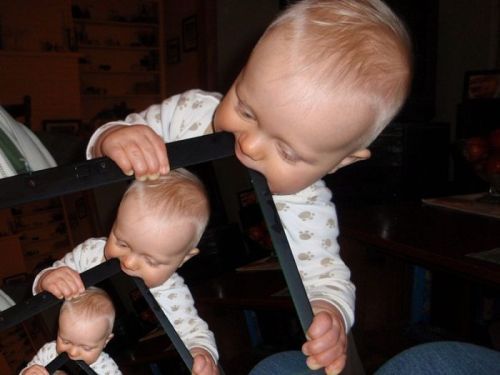
Are babies becoming hard-wired for interacting with content onscreen in a way unatainable for us, older generations? Or, are comprehension, immersion and healthy reading habits seriously undermined by electronic devices? The answer would depend on whom you are asking. A few studies stressing the importance of interaction with the book for retention and a sense of orientation in the text, have taken a prominent place in conversations about reading in media and at schools. While this line of research is important, focusing on comparisons with the print is taking our attention away from new reading practices emerging from our daily interactions with digital technology. 

In my article Transliterate Reading, published last week in the Scholarly and Research Communication, I consider results from three research projects showing common threads in the behaviour of vary different groups of people – academics in the humanities, high school students and the community as users of a historical website (historyofaboriginalsydney.edu.au). A disappearing line between user, reader and creator emerges as a common theme from data about behaviours of the three groups of users. Even the distinction between print and digital is not as clear as it firstly appears. In the environment where searching, browsing, communication, and skim and focused reading quickly replace each other, the pattern of behaviour is as important as its particular aspects. The concept of ‘transliterate reading’ points towards ‘the practice of reading across a range of texts when the reader seamlessly switches between different platforms, modalities, types of reading, and genres’. 


In the article I consider a range of behaviours to illustrate the concept of transliterate reading. Particularly interesting to me are creative aspects of reading, which emerge from ‘reading across’ and juxtaposition of ideas. An academic study participant explains the experience:

… when you’ve got your computer going and you’ve got a couple of different documents open and you’re cutting and pasting or you’re toggling between two or three documents… you’re just feeling ideas come out of this idea, idea number one and idea number two. When they pop up against each other often completely other idea, idea number 25 will, sort of, turn up out of that.
We don’t know yet what sort of ideas and skills will pop out of transliterate reading, but there is evidence that practices are changing. Academics and teenagers are both unsure about the right way to interact with digital texts as there is very little in traditional education that has prepared them for transliterate using-reading-creating. Librarians and teachers have an excellent vantage point to observe the change and gather evidence for new programs and devices, which will enable fluid reading across texts and technologies.  

Image: http://www.mommyposh.com/wp-content/uploads/2011/10/baby-tech.jpg

Thursday, 29 October 2015

Collaborative approaches for social memory

https://upload.wikimedia.org/wikipedia/commons/b/bd/GLAM_logo_transparent.png 


By Katherine Howard
  
Edwards, P. (2004) Collection development and maintenance across Libraries, Archives and Museums: A novel collaborative approach. Library Resources and Technical Services, 48(1), pp 26-33
Full text available to ALIA members via ProQuest database.


This article was first published in Incite (October 2015) 


With this month’s InCite theme being Collections, I wanted to select an article for LIS Investigations that incorporated the collections of our sister institutions: archives and museums. The Edwards (2004) article, based on his PhD research, takes an holistic approach to the collections of libraries, archives and museums*, suggesting amongst other things that a collaborative approach to collection processes “may enable collecting institutions to provide a high level of service to patrons” (p. 26). Despite being over ten years old, the article raises issues that are yet to be fully investigated.

Edwards’ argument centres on the “social value of objects within collections” (p. 28), and that it is fundamentally due to decisions of accessioning and de-accessioning that determine whether those objects are deemed to have continuing value (i.e. they enter and/or  remain within the collection), or are deemed ‘value-less’ (i.e. they are removed from the collection). Those documents that are designated as “archival” are seemingly “placed […] on the pedestal of national progress, sacred memory, civilisation, history, culture, democracy or social necessity […] and assigned a special status” (Nesmith, 2004 as cited in Edwards, 2004). Edwards (2004) refers to this as items being transfunctionalized: that the meaning of a document moves toward a socio- or ideofunction as opposed to a technofunction.  While the effect that selection/exclusion decisions have on the shaping of social memory and what is considered ‘valuable’ may not be a new revelation, what is new is Edwards’ proposed collaborative solution.

In order to preserve a more holistic view of our social memory, Edwards suggests that a collaborative approach to de-accessioning in particular between libraries, archives and museums is perhaps a better option, arguing that “[w]hen a collecting organization acts in isolation, there is always the potential that some valuable materials will be prematurely lost” (p. 30). Edwards asks if we, as a collective professional group, “could align some of our processes and practices in order to better serve the interests of society” (p. 30), given that society has become less interested in where material is housed, only that  it can be accessed. 

While noting that differences in collecting philosophies can lead to tensions between institutions, Edwards highlights that decisions made at a local, individual institutional level may not be the same as those made collectively. Hence, he advocates for a “shift in paradigm – from local to societal value judgements” (p. 31).

Although some of the technological aspects mentioned in the article are now in existence, the overarching tenet of the article is nevertheless still applicable: that the overall social welfare generated from a more collaborative system of collection development and maintenance could prove to be quite significant (p. 31).  Edwards closes the article by appealing to library, archival and museum professionals to rethink how our practices relate to one another, and suggests that viewing current practices through social theoretical constructs may assist us to re-shape future practices.

* Museums in the US are inclusive of what Australians refer to as a Gallery, hence there is no specific reference to galleries in this article.


**Image source https://meta.wikimedia.org/wiki/GLAM 


Dr Katherine Howard is Lecturer at RMIT

Saturday, 24 October 2015

#EBLIPRG (Evidence-Based Library Practice Reading Group) Meeting on Thursday, 29 October

By Liz Walkley Hall
 
#EBLIPRG (Evidence-Based Library Practice Reading Group) Meeting on Thursday, 29 October, NEW TIME 2pm AEST on Twitter. #LARK

The next #EBLIPRG  article is :

Wilson, V. (2013). Formalized curiosity: Reflecting on the librarian practitioner-researcher. Evidence Based Library and Information Practice, 8(1), 111-117.
In this article, @virginiaprimary (Director, Centre for Evidence Based Library & Information Practice (C-EBLIP), University Library, University of Saskatchewan) discusses the role of practitioner-researchers and the contribution research can make to practice.

I invite all librarians, both practitioners and practitioner-researchers, to read and reflect on this article and share what it means for them in their workplaces.

Some questions to get us started:

  • Are you supported to do research in your workplace? And if so, how? It would be great to hear of any examples of support.
  • If you are a practitioner-researcher, what motivates you to do this? As there is often a personal investment (of our time) in research projects.
  • If you are not a practitioner-researcher, would you like to be? And if so, what would help you get there?

I look forward to our next stimulating tweet chat! And don't forget the NEW time 2pm AEST, not 8pm as previously advertised. See you there.